> For the complete documentation index, see [llms.txt](https://docs.rapidproxy.io/llms.txt). Markdown versions of documentation pages are available by appending `.md` to page URLs; this page is available as [Markdown](https://docs.rapidproxy.io/proxies/integration-guide/dynamic-residential-proxies/mulogin.md).
# Mulogin
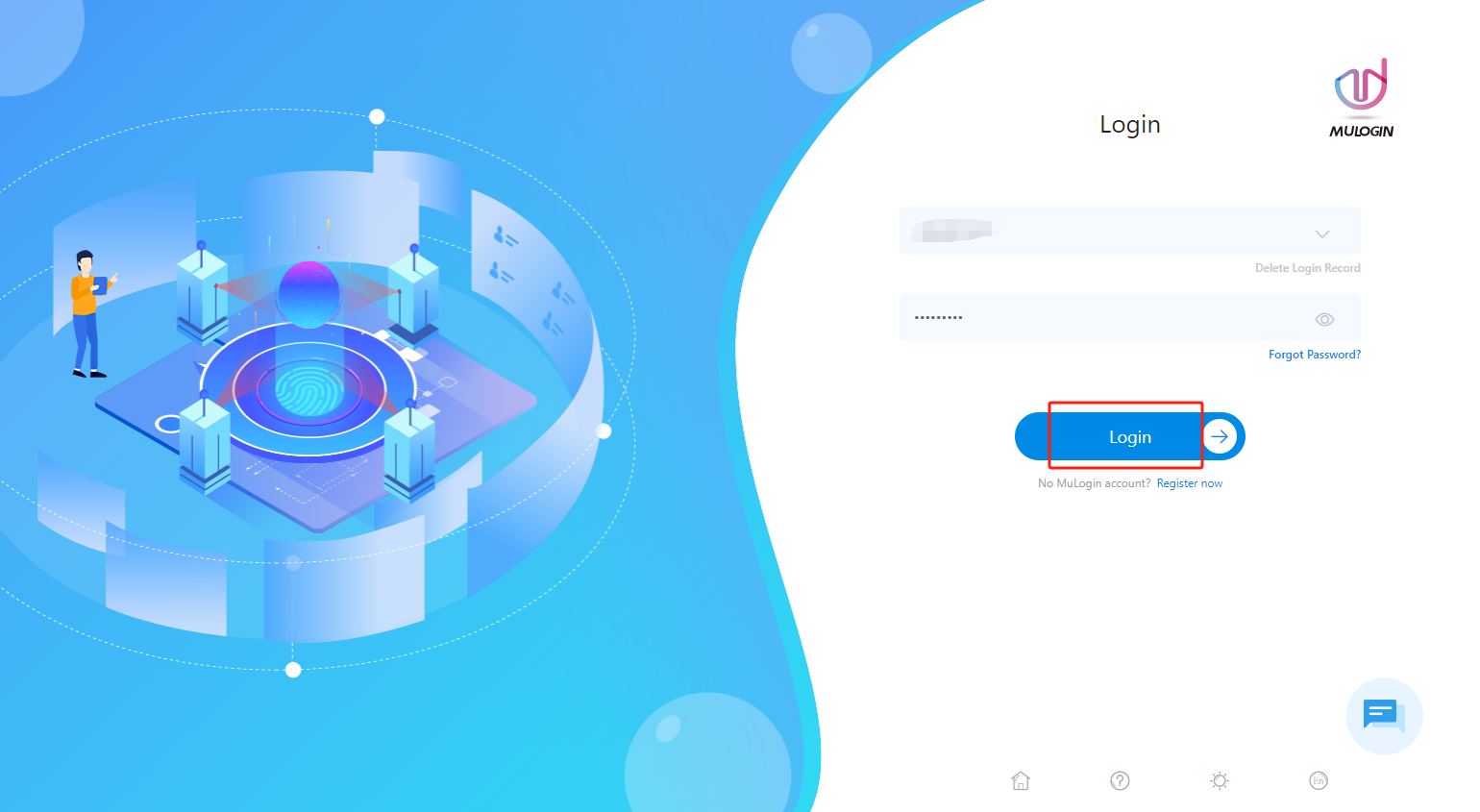
### **Step 1: Log In**
Open the [**MuLogin browser**](https://www.mulogin.com/?ref=rapidproxy) and click **【**[**Login**](https://www.mulogin.com/?ref=rapidproxy)**】** to access your account.**Support 3-day Free Trial**
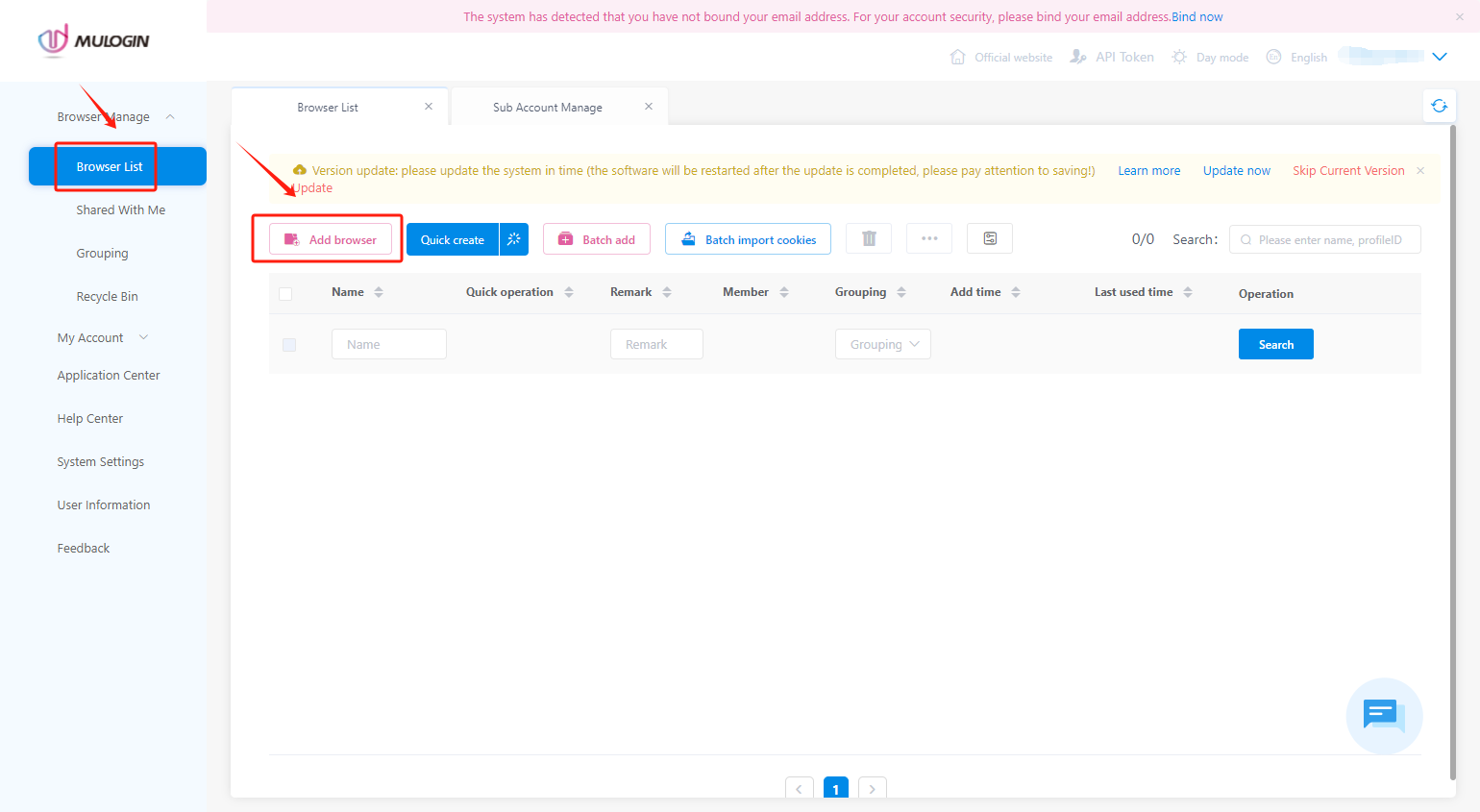
### **Step 2: Create a New Proxy Configuration**
Navigate to 【Browser Manager】 — 【Browser List】 — 【Add Browser】 to create a new profile.
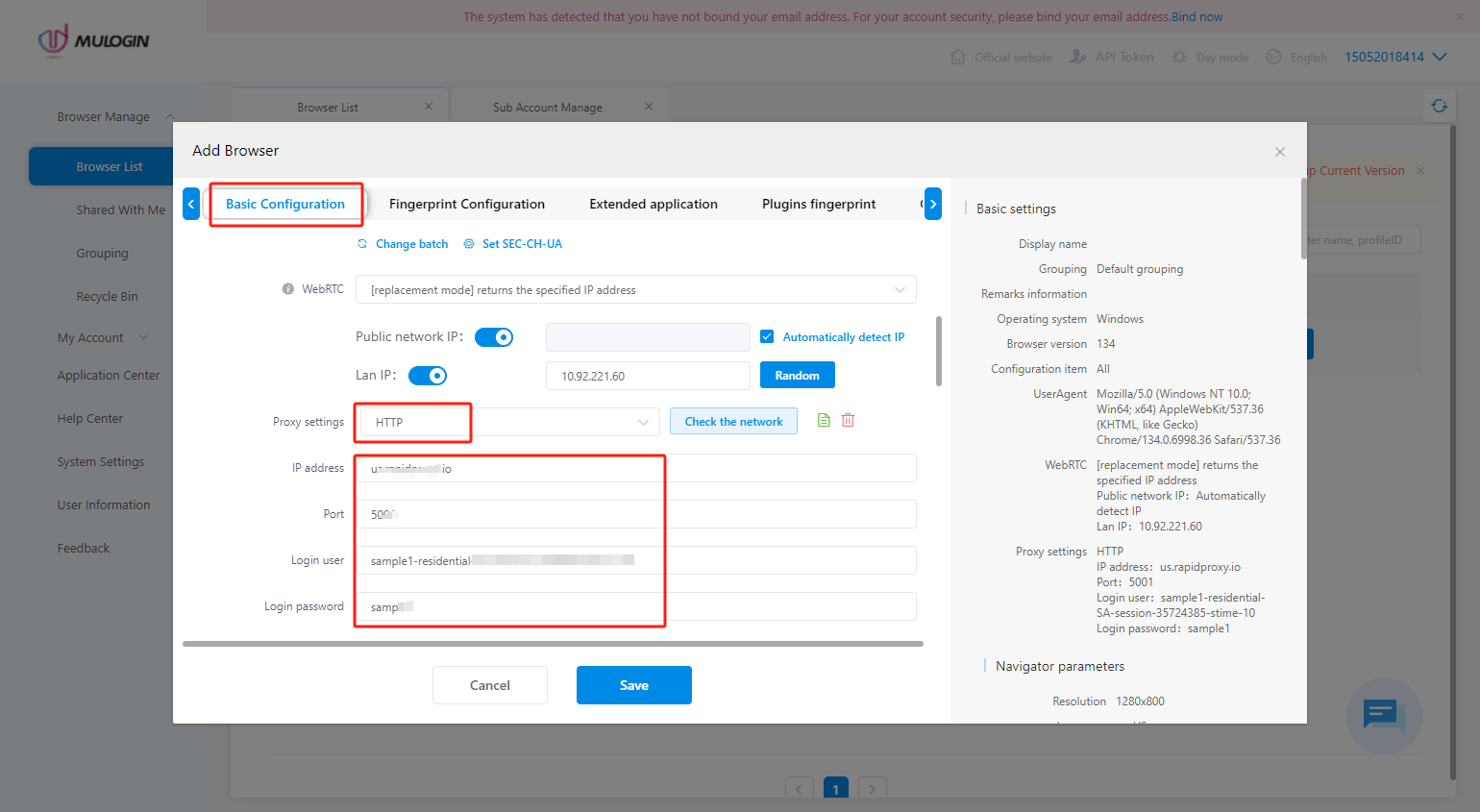
### **Step 3: Configure Proxy Settings**
* In the 【Basic Configuration】 section, locate 【Proxy settings】 and select 【HTTP】.
* Paste the proxy details provided by Rapidproxy into the corresponding fields.
*Note: This example uses 【HTTP】; Rapidproxy supports 【HTTP】, 【HTTPS】, and 【SOCKS5】 protocols.*
* [How to Get Residential Proxies by APl?](/proxies/dynamic-residential-proxy/get-proxy/api/get-proxy-via-api-method.md)
* [How to Get Residential Proxies by User & Pass Auth?](/proxies/dynamic-residential-proxy/get-proxy/user-and-pass-auth/configuring-residential-proxies.md)
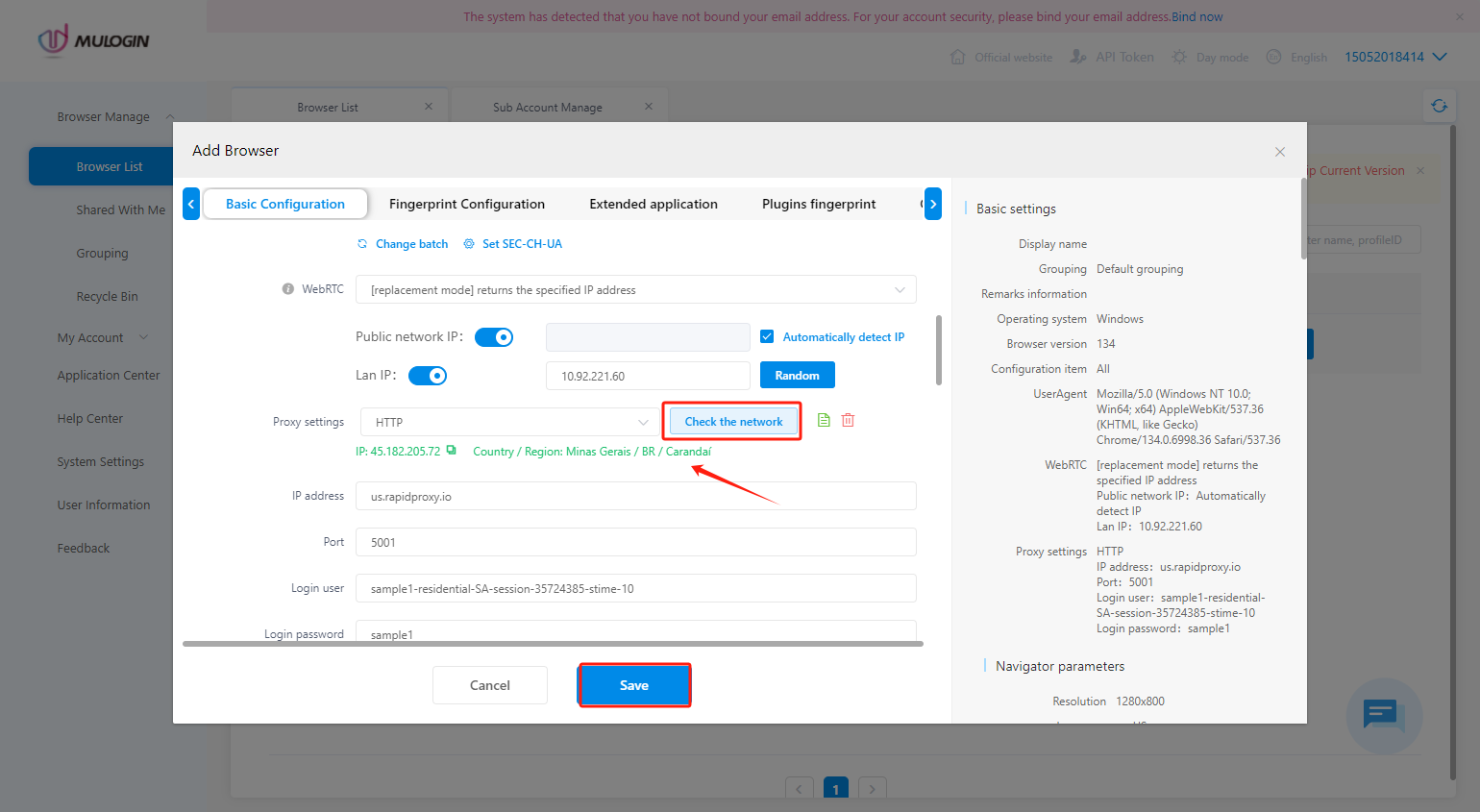
### **Step 4: Verify Proxy Connection**
* Click 【Check the network】 to test the proxy connection.
* If successful, proxy details will be displayed.
* Click 【Save】 to save the configuration.