> For the complete documentation index, see [llms.txt](https://docs.rapidproxy.io/llms.txt). Markdown versions of documentation pages are available by appending `.md` to page URLs; this page is available as [Markdown](https://docs.rapidproxy.io/proxies/integration-guide/dynamic-residential-proxies/morelogin.md).
# MoreLogin
### **Step 1: Log In**
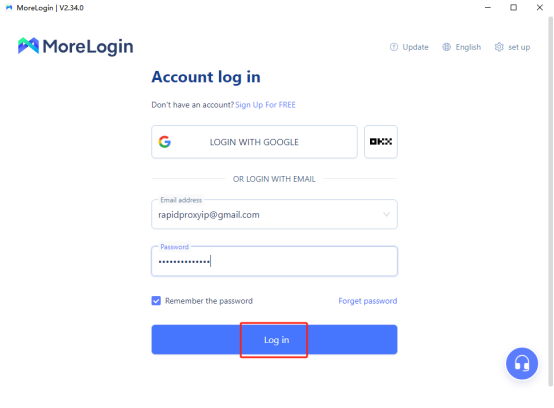
Open the MoreLogin browser and click **【Log in】** to access your account.
### **Step 2: Create a New Profile**
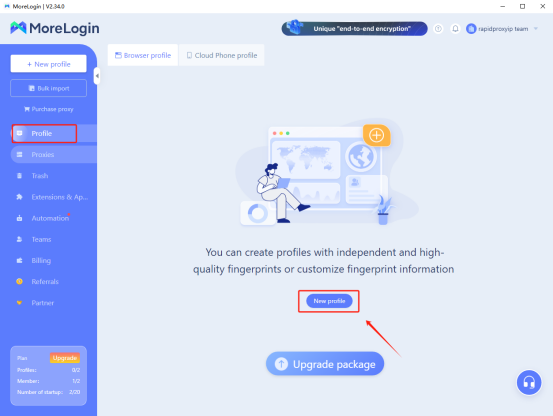
Click **【Profile】**, then select **【New profile】**.
### **Step 3: Set Proxy Type**
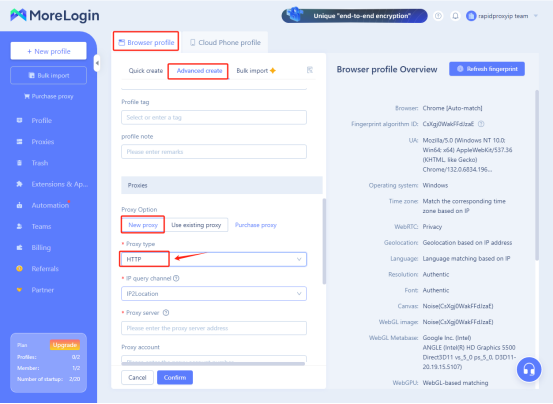
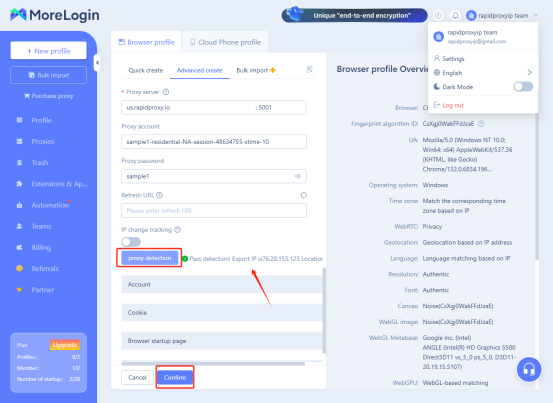
* In the new profile, click **【Browser profile】**, select **【Advanced create】**, and then choose **【New proxy】**.
* In the **【Proxy type】**, select **HTTP**.
**Note:** This guide uses **HTTP** as an example. Rapidproxy supports **HTTP(S)** and **SOCKS5** protocols.
### **Step 4: Enter Proxy Information**
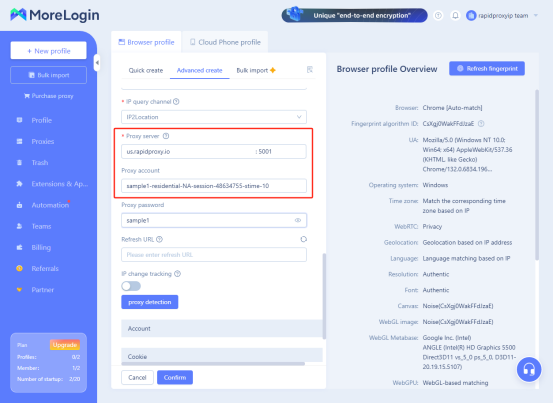
Paste the proxy information generated from Rapidproxy into the corresponding fields in MoreLogin.
* [How to Get Residential Proxies by APl?](/proxies/dynamic-residential-proxy/get-proxy/api/get-proxy-via-api-method.md)
* [How to Get Residential Proxies by User & Pass Auth?](/proxies/dynamic-residential-proxy/get-proxy/user-and-pass-auth/configuring-residential-proxies.md)
### **Step 5: Check Proxy Connection**
* After configuration, click **【proxy detection】** to check if the proxy connection is working properly.
* If everything is normal, you will see the message **"Pass Detection!"**, indicating that the proxy has been set up successfully.
* Click **【Confirm】** to save the configuration.
### **Step 6: Start Using the Proxy**
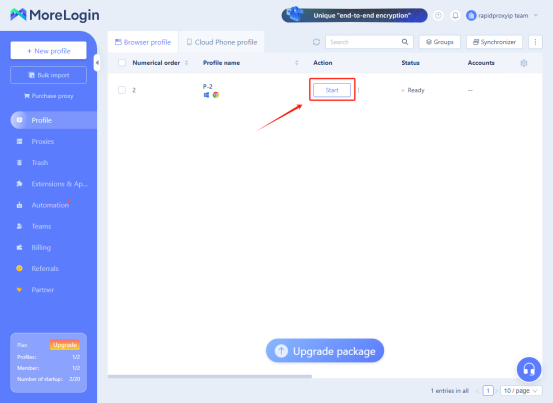
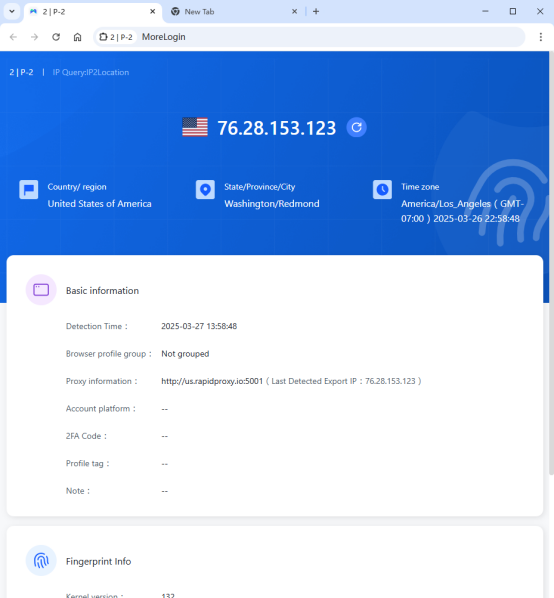
Click **【Start】** to begin using the configured proxy. You can now safely engage in online activities.